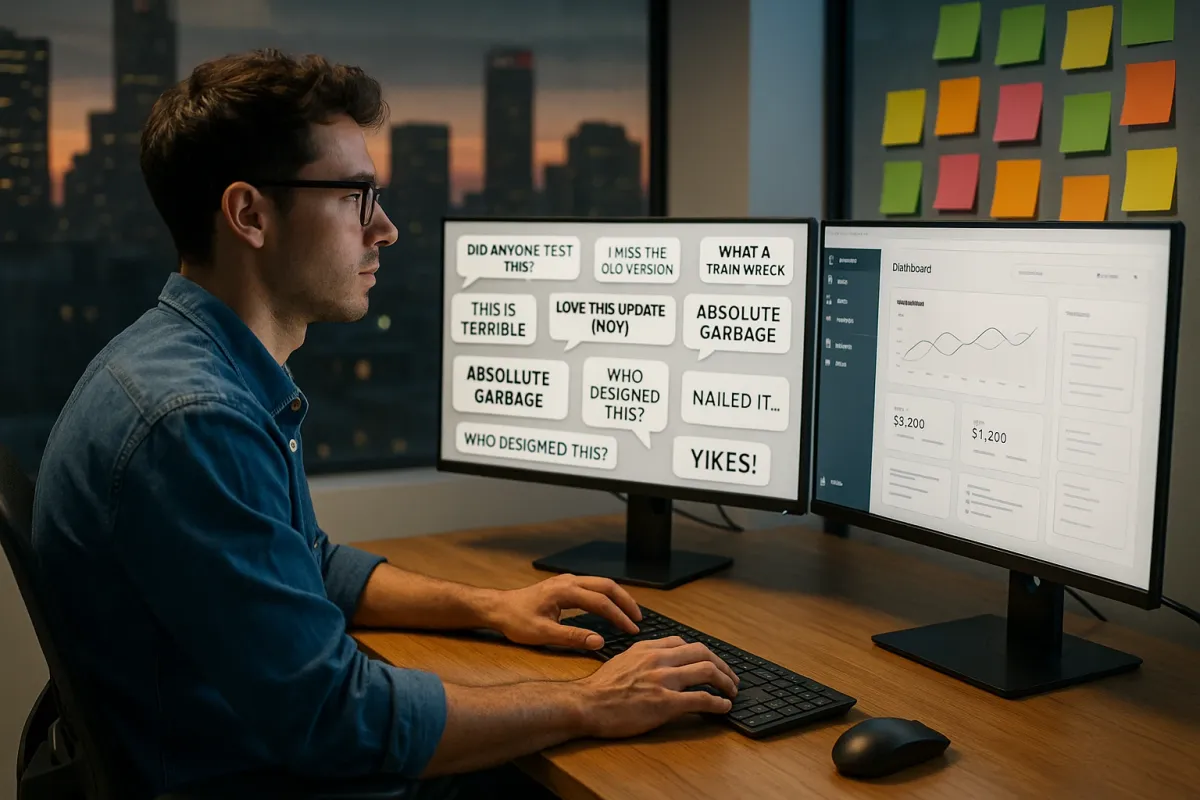
If you spent any time doomscrolling today, you probably saw it: screenshots of absolutely cursed comments going viral again, powered by the “Cursed Comments” subreddit and a fresh wave of shares. People are laughing, cringing, and hitting that share button like it’s a full-time job.
But here’s the twist: what looks like internet chaos is actually a masterclass in what modern SaaS platforms have to get right in 2025—especially anything touching comments, communities, content moderation, or user experience.
Today, we’re turning that trending “cursed comments” moment into a SaaS reality check: how do tools that power comments, communities, and collaboration stack up when the internet gets… weird?
Let’s break down what this trend is really saying about SaaS—so you can pick tools that don’t crumble the next time your user base goes viral for all the wrong reasons.
1. Moderation-First Design Is No Longer Optional
The “Cursed Comments” subreddit is funny because it’s curated chaos—someone is actually filtering, sorting, and showcasing it. That’s exactly what most SaaS products don’t do well yet: they let user-generated content flow in, but they treat moderation as an afterthought.
Modern SaaS platforms built for communities—think Discourse, Circle, or Commsor-backed tools—are already pivoting to moderation-first UX. We’re talking built-in tools like AI-powered flagging, toxicity detection, automated shadow bans, and granular roles for community managers. The days of “report this post” being the only control are over. If your SaaS doesn’t let teams slice and dice permissions, build rule-based automations, and triage high-risk content, it’s already behind. The viral cursed-comment craze is a warning label: your product needs to handle the worst of human behavior… gracefully.
2. Comment Systems Are Becoming Full-Blown SaaS Ecosystems
Those wild screenshots circulating on X, Reddit, and Instagram? Most of them come from platforms stitched together with comment plugins and embeddable SaaS tools—not custom code.
SaaS players like Disqus, Hyvor Talk, and Giscus-style GitHub-powered systems have quietly evolved from simple chat boxes into mini social networks. You’ve got reactions, threading, badges, identity layers, analytics, and even built-in ad monetization. The big shift in 2025: these tools are moving from “drop-in widget” to “engagement stack,” complete with APIs, webhooks, and integrations into CRMs, marketing tools, and data warehouses.
So when you’re reviewing or choosing a comment SaaS today, don’t just ask: “Can users type stuff here?” Ask:
- Can I track comment behavior like product usage data?
- Can I pipe this into HubSpot or Segment?
- Can I surface the best (or wildest) comments automatically for campaigns?
If not, that tool is a relic from the Web 2.0 era—fun, but not future-proof.
3. The Funniest Content Wins… But The Smartest SaaS Survives
Cursed comments are viral because they’re unhinged, unexpected, and instant-share material. That’s exactly how your SaaS should feel—minus the unhinged part. The tools thriving right now are the ones that lean into entertainment-level UX: snappy microcopy, playful interactions, and design that’s built to be screenshot-worthy.
Look at the rise of Loom-style async video tools, Notion’s delight-focused UI, or Slack’s reactions and meme-ready threads. This isn’t fluff—it’s strategy. When users want to share something from your product on social media because “this cracked me up” or “look how clean this is,” you just landed free distribution.
In SaaS reviews right now, products that feel dull—even if powerful—are getting side-eyed. Trendy teams want:
- frictionless onboarding that feels like TikTok, not SAP
- sharing flows built-in (copy link, auto-thumbnail, smart previews)
- UI that translates into viral screenshots and clips
Cursed comments are the content. Your SaaS should be the stage where that sort of energy could happen—without becoming a dumpster fire.
4. AI Is Now the Silent Co-Moderator (Whether You Like It or Not)
The internet has officially crossed the point where human-only moderation can keep up. One viral thread, one controversial post, and you’ve got thousands of inputs in minutes. That’s why AI is sliding from “nice add-on” to non-negotiable core feature in review-worthy SaaS tools dealing with content.
We’re seeing a new wave of tools and features baked into platforms like Zendesk, Intercom, and community SaaS products:
- AI scoring for risk (hate speech, self-harm, harassment)
- Context-aware filters that understand sarcasm vs. actual threats
- Smart escalation that routes comments to the right teams
And here’s the kicker: users are starting to expect this. If your SaaS lets obviously cursed content sit visible for hours, it’s not just a brand issue—it’s a product red flag. In 2025 SaaS reviews, one of the quiet deciding factors is: “Does this tool keep our community safe without us babysitting 24/7?” If the answer is no, your competitors’ AI features will eat your MRR.
5. Screenshots Are the New Demo—So Your UI Has to Be Meme-Ready
Those cursed-comment screenshots going viral? Nobody needed a product walkthrough. One image, and the entire internet got the joke. Your SaaS needs to work the same way: one screenshot should sell the story.
This is reshaping how people review software:
- Instead of 2,000-word breakdowns, users share a single dashboard shot on LinkedIn.
- Instead of detailed case studies, buyers see one Slack thread about how a tool saved someone’s sprint.
- Instead of dense pricing pages, they share side-by-side UI comparisons.
This means your product’s visual language is now part of your growth strategy. Clean layouts, obvious outcomes, visible “wins” (like saved hours, money, or conversions) all matter. SaaS that still looks like internal tooling from 2012? It’s going to get roasted—and not in a charming cursed-comment way.
If you want your app to be shareable, design every screen like it could end up on X, Reddit, or TikTok tomorrow morning. Because it might.
Conclusion
Today’s resurgence of “cursed comments” across social platforms isn’t just meme fuel—it’s a spotlight on what modern SaaS absolutely must master: moderation, community-aware UX, AI safety nets, and screenshot-ready design.
The internet will always generate chaos. The real question for SaaS in 2025 is:
Are you the platform that barely survives it—or the one that turns it into curated, shareable, brand-boosting magic?
If your current stack feels one scandal away from disaster, this is your cue: audit your tools, level up your moderation features, and choose SaaS that’s built for the wild, viral, beautifully unhinged reality of the modern web.
Key Takeaway
The most important thing to remember from this article is that this information can change how you think about SaaS Reviews.