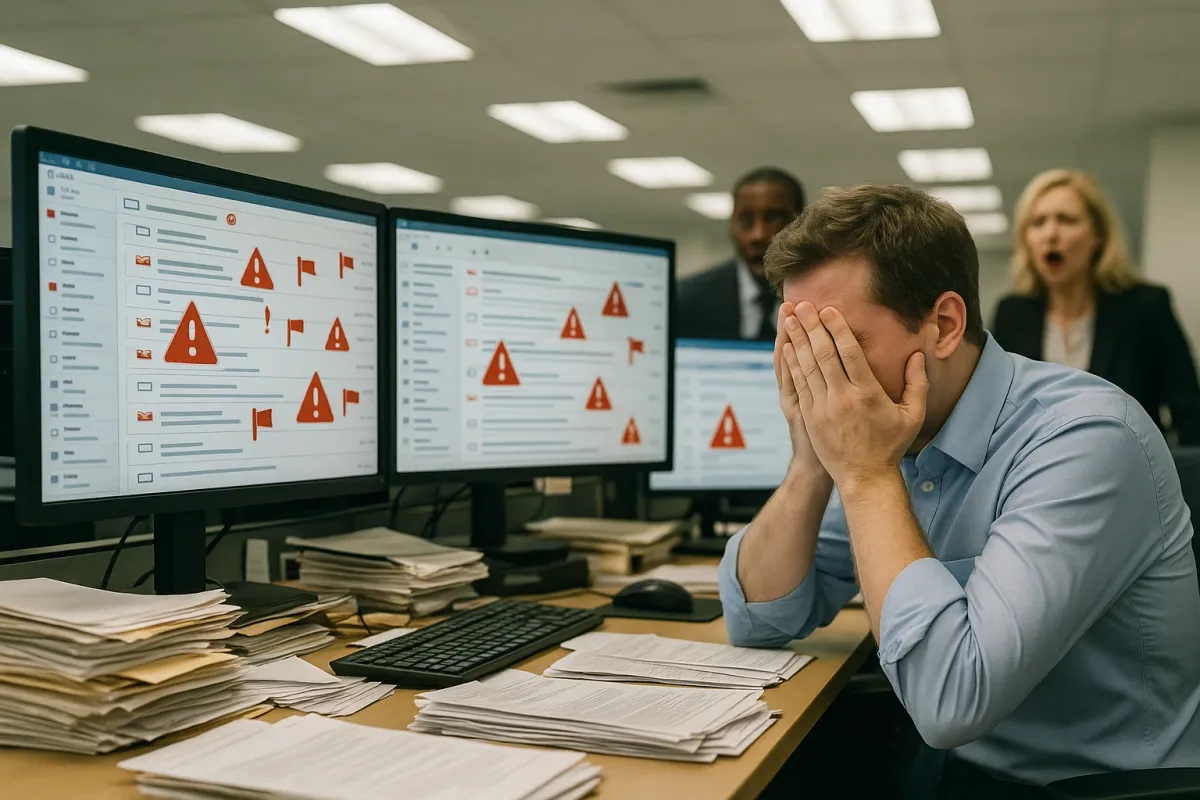
If you’ve been anywhere near X (Twitter) lately, you’ve probably seen those viral threads where people share the absolute worst work emails they’ve ever received—unhinged all‑caps subject lines, 2 a.m. “quick asks,” and reply‑all disasters that should’ve stayed in Drafts forever. One of those threads, packed with screenshots of passive‑aggressive messages and chaotic CC chains, has been racking up millions of views and quote‑tweets.
Underneath the memes and rage‑likes, there’s a serious signal for SaaS teams: the way we communicate at work is completely out of sync with the tools we’re still using. Those “worst work email” posts aren’t just funny—they’re user‑generated product feedback in the wild, and they’re loudly saying: email alone is not it.
Let’s break down what these viral email fails are really telling us about where business tools are headed next.
1. The Reply‑All Apocalypse Is Killing Productivity (And Why Inbox‑Free Workspaces Are Rising)
Every time a “reply‑all nightmare” screenshot goes viral, you can practically hear SaaS founders taking notes. Thirty people looped into an endless CC chain, no clear owner, seven “per my last email” responses, and zero actual decisions—that’s not just annoying, it’s expensive.
This is exactly why we’re seeing a hard shift toward inbox‑free collaboration: tools like Slack, Microsoft Teams, and Notion are becoming the real operating system for daily work, while email quietly gets demoted to “external only.” Threaded discussions, channels by project, and emoji reactions are replacing the 14‑message CC storm. The next wave of SaaS is going even further, turning conversations into structured workflows—think comments that can be converted into tasks, approvals, or tickets with one click. The viral email drama is basically free marketing for tools that promise: “Never get trapped in a reply‑all again.”
2. Passive‑Aggressive Emails Are UX Bugs, Not Just Bad Managers
Those screenshots of “gentle reminders” that feel more like threats? They’re not only about toxic culture—they’re about bad communication UX. Long, ambiguous messages leave way too much room for misinterpretation, especially across time zones and teams that barely know each other.
Modern business tools are quietly fixing that. We’re seeing more structured messaging built directly into SaaS: pre‑set templates for approvals, one‑click yes/no responses, status updates that follow a consistent format, and AI that can auto‑summarize tone and intent. Some platforms are even experimenting with “tone guards” that flag potentially aggressive language before you hit send—imagine your project tool warning you: “This might be interpreted as hostile. Want to soften it?” The viral outrage over harsh emails is basically a spotlight on a new product category: tools that make professionalism the default, not the exception.
3. Timestamp Shame Is Pushing Async‑First Tools Into the Spotlight
You’ve seen the screenshots: emails sent at 1:47 a.m. with a subtle “any updates?” or “super quick thing” subject line. The quote‑tweets read like a manifesto: people are done with being on call for their inbox around the clock. That backlash is fueling a serious move toward asynchronous‑first SaaS.
Instead of “always on” tools, we’re getting platforms that are time‑zone aware, that batch notifications, and that clearly separate urgent from non‑urgent by design. Standup tools that replace live meetings with async check‑ins. Video‑message apps where you can respond when your brain is actually online. Project systems that show clear SLA expectations instead of “whenever I email you, it’s urgent.” The viral disgust at those 2 a.m. messages is a demand for tools that respect focus time—and make urgency the exception, not the default setting.
4. CC’ing the World Exposed a Huge Need for Role‑Aware Workflows
A lot of the worst email stories orbit around the same problem: no one knows who’s responsible for what. So people CC everyone “just in case,” which instantly bloats inboxes and dissolves accountability. Those screenshots of 20 people getting called out at once? That’s a workflow design failure, not just a manager having a bad day.
Modern business tools are attacking this with role‑aware workflows: clear owners, watchers, and approvers built into every task or document. Instead of blasting a whole department, you assign a single owner and then optionally tag stakeholders. Tools like Asana, ClickUp, Monday.com, and Linear are popular because they make “who’s on the hook?” a visible, non‑negotiable field. The SaaS stacks that win next will be the ones that treat CC chaos as a bug to squash, not a “people problem” to shrug off.
5. Viral Email Fails Are Becoming the New Product Roadmap for SaaS
Here’s the wild part: those “worst work email” threads aren’t just entertainment—they’re real‑time market research for SaaS builders. Every screenshot is a use case. Every quote‑tweet rant is a user story. “I hate when people do X in email” translates almost directly into “I want a tool that prevents X, or makes Y easier instead.”
We’re already seeing AI‑powered tools jump on this: smart triage that separates tasks from FYIs, automatic action items extracted from messages, and integrations that turn emails into structured objects inside project tools, CRMs, and help desks. Some startups are training models specifically on workplace communication patterns, aiming to catch misalignment, missing context, or vague asks before they blow up into another viral “email from hell.” The more these threads trend, the clearer the message becomes: if your SaaS still assumes “the email is where work happens,” you’re building for the past, not the feed.
Conclusion
Those infuriating, hilarious work email threads rocketing around social media right now aren’t just internet drama—they’re a live diagnosis of what’s broken in our business tools. Reply‑all chaos, vague asks, late‑night pings, CC overload, misread tone… all of it is screaming for a new generation of SaaS that treats communication as a designed system, not a random stream.
For founders, PMs, and power users, the opportunity is wide open: build (or adopt) tools that turn messy messages into clean workflows, respect async collaboration, and bake clarity into every interaction. Because the next viral thread shouldn’t be “worst emails ever”—it should be screenshots of teams saying, “Remember when we used to run projects out of our inbox?”
Key Takeaway
The most important thing to remember from this article is that this information can change how you think about Business Tools.